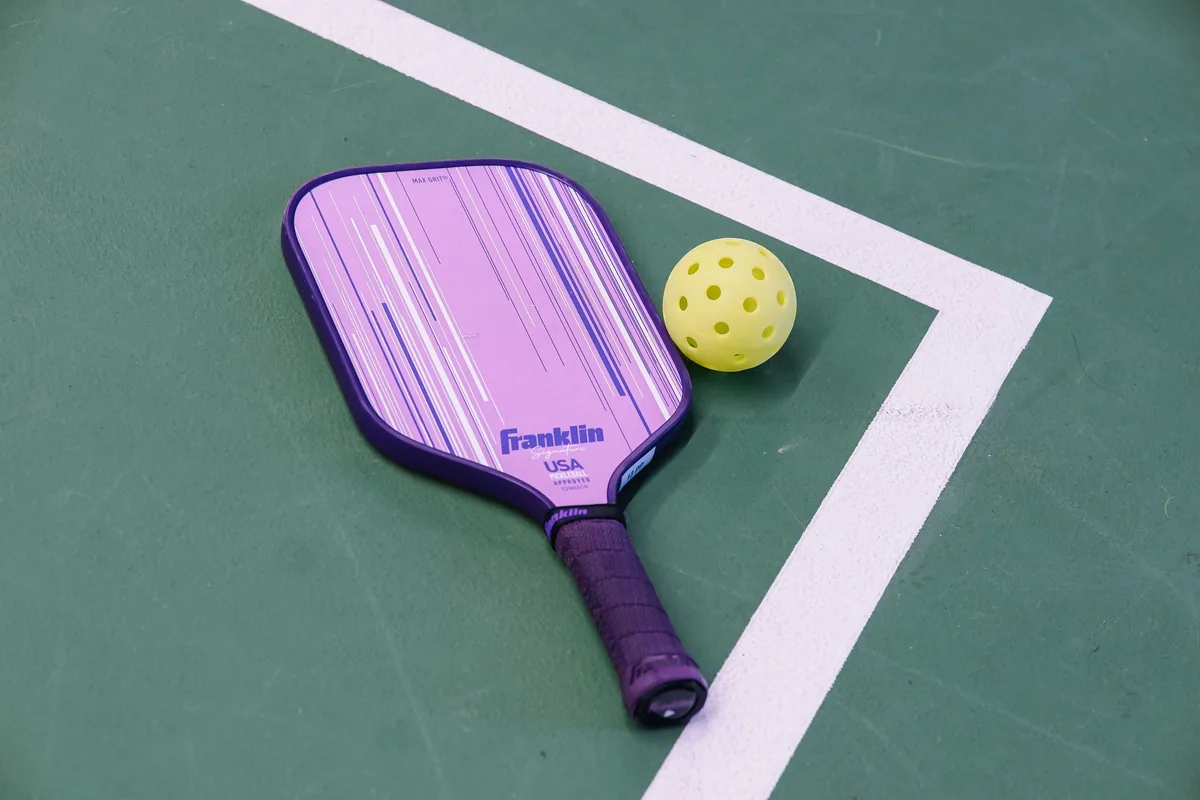
Check which layer is worn before buying a new paddle. An overgrip wraps over the existing grip; a replacement grip takes the place of the cushioned layer on the handle. Choose the part you need before removing anything.
Identify the layer on the handle
The main grip is the cushioned layer around the handle. An optional overgrip is a thinner wrap placed over it. If only the overgrip is worn, inspect the main grip before removing it too. Buying a replacement grip and buying an overgrip solve different maintenance needs.
Use wear as your starting point
Look for peeling, a slippery surface or a wrap that moves. Note which layer has changed. There is no replacement interval that fits every player: use, sweat and the chosen material affect wear. A fresh wrap will not repair a loose or damaged handle; ask the manufacturer about structural problems.
Fit the Replacement Carefully
Follow the instructions supplied with your grip. Selkirk’s replacement guide starts at the handle butt, uses a slight overlap and finishes with securing tape. Remove only the layer you intend to replace, keep the wrap even and trim excess away from the paddle. Ask a shop for help if removal is difficult.
Check the finished handle
Adding layers changes the handle’s thickness. Before playing, check that the wrap stays secure and the handle still fits your usual grip. If it feels bulky, review the chosen thickness and overlap rather than adding more layers.
- Check the finishing tape and any raised edges.
- Try your normal hand position and, if used, a two-handed backhand.
- Keep the grip packaging so you can repeat a setup that fits.
Clean the Face Separately From the Grip
Selkirk recommends water and a damp, lint-free cloth for face cleaning, and limits its cleaning-block method to raw-carbon faces. Do not apply that method to a painted or coated face just because the paddle contains carbon. Follow your exact model’s care instructions, dry it before storage and never immerse it in water.