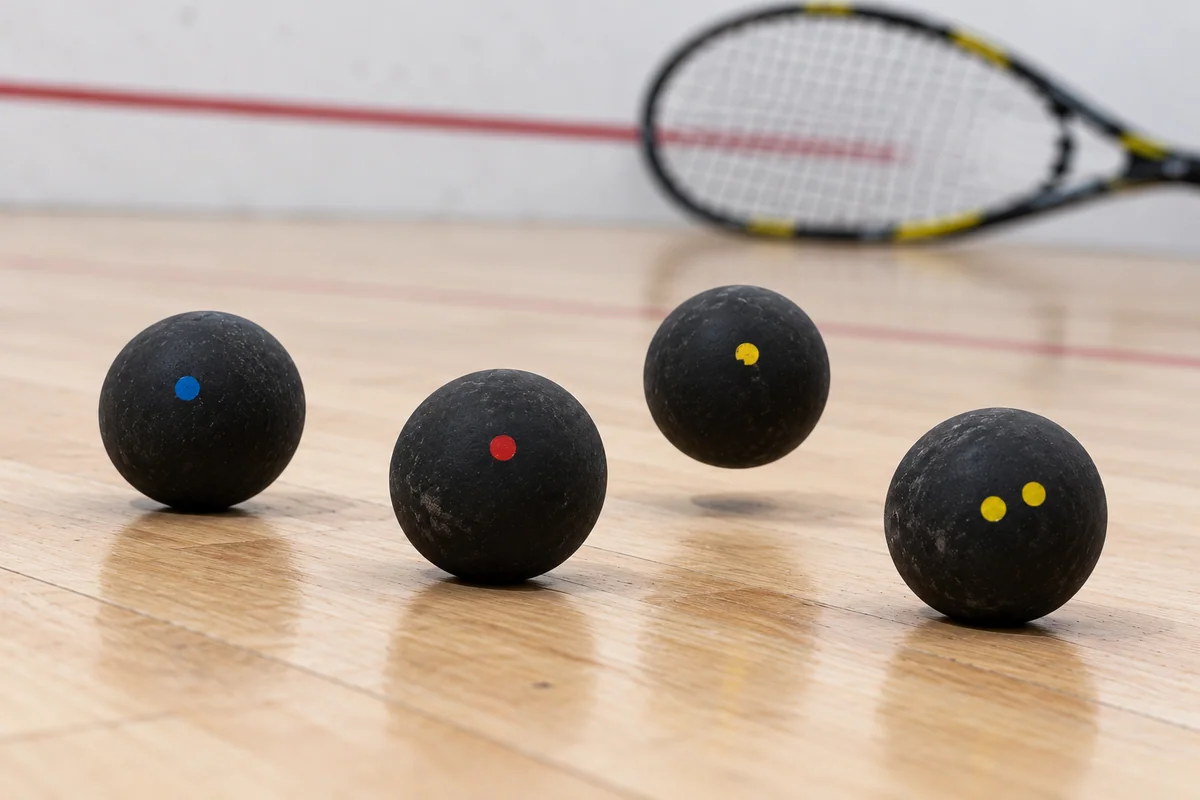
The dot marking indicates a squash ball’s speed category. Its bounce also depends on how warm it is during play.
Read the dot color
The usual speed markings are blue (fast), red (medium), single yellow (slow) and double yellow (super slow). Check the ball and its packaging; the product name alone may not identify the marking.
Choose a ball that lets you rally
England Squash suggests blue or red dots for beginners. The extra bounce gives you more time to reach the ball and return it. Ask your coach which suits your session.
Allow for a cold court
A squash ball bounces more as it warms up during play. On a cold court, or with frequent pauses, a low-bounce ball can make rallies harder to sustain. Choose for the conditions you are playing in.
Try two balls in the same exercise
To compare balls during practice, keep the rackets and exercise the same. Follow each ball’s warm-up guidance and compare how easily you and your partner can keep the rally going.
Dunlop Ball Ranges by Market
Dunlop’s UK range includes Game Blue, Game Red and Club; its US catalog also lists Competition. Similar positions in a range do not guarantee the same dimensions or bounce. Check the manufacturer’s description for your market.
For a League or Tournament
Use the ball specified by the organizer. Check the event’s requirements before buying balls for practice.
A US Program Planned for Early 2027
US Squash and Dunlop announced the “Use the Right Ball” campaign on October 17, 2026. They plan to launch it in early 2027 as new balls reach US stores, pairing five levels of play with five ball types. The announcement concerns a US program; it leaves the current dot-color guidance and individual tournament requirements unchanged.