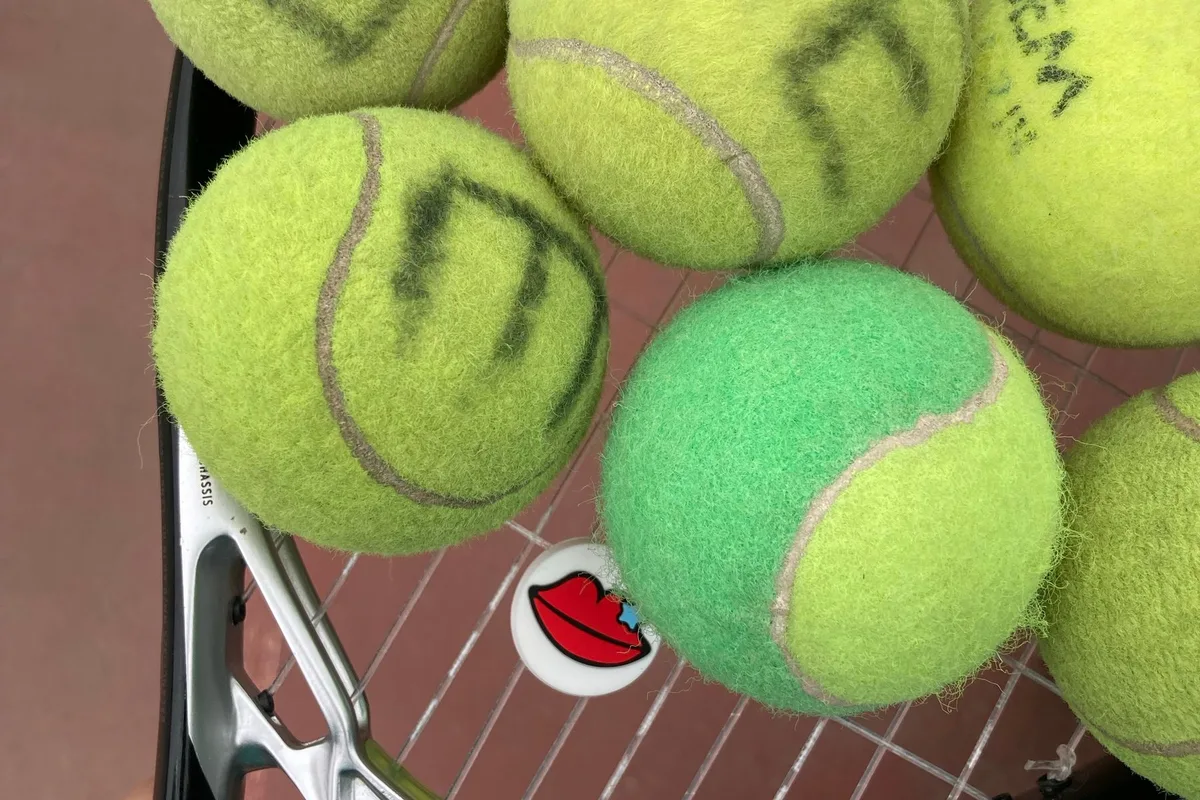
Choose a ball for your session, learning stage and court surface. Pressureless practice balls and slower learning balls describe different choices.
Choose by the session
For a match, check the event’s ball requirements and the exact model. For repeated feeds or a ball machine, consider a pressureless training ball and check the machine instructions. For a first lesson, ask the coach which slower ball fits the session.
Pressure and Training Stage Are Different Choices
A pressurised ball relies partly on its internal pressure for bounce; a pressureless ball relies more on its rubber core. Neither label tells you the learning stage. A standard yellow pressureless ball is not automatically a slower beginner ball.
Red, Orange and Green Learning Balls
ITF names the progression Stage 3 red, Stage 2 orange and Stage 1 green. Match the ball and court to the lesson; adult beginners can also practice with slower balls. Select the stage with the coach rather than choosing by packaging color alone.
Read the surface label
In Wilson’s range, Extra Duty felt is intended for abrasive hard courts and Regular Duty for softer surfaces such as clay. Check the specific ball maker’s surface guidance. An indoor court can still have a hard surface, so “indoor” alone is not enough to choose.
Check the set before playing
Keep the balls in a session as consistent as possible. Set aside balls with noticeably different bounce, damaged seams or heavily worn felt. Compare under the same conditions; there is no single replacement timetable for every surface and playing frequency.
Keep tennis and padel balls separate
A similar yellow felt surface does not make the balls interchangeable. Buy the ball labeled for your sport and check tournament requirements separately. The padel ball guide explains the difference without relying on appearance.