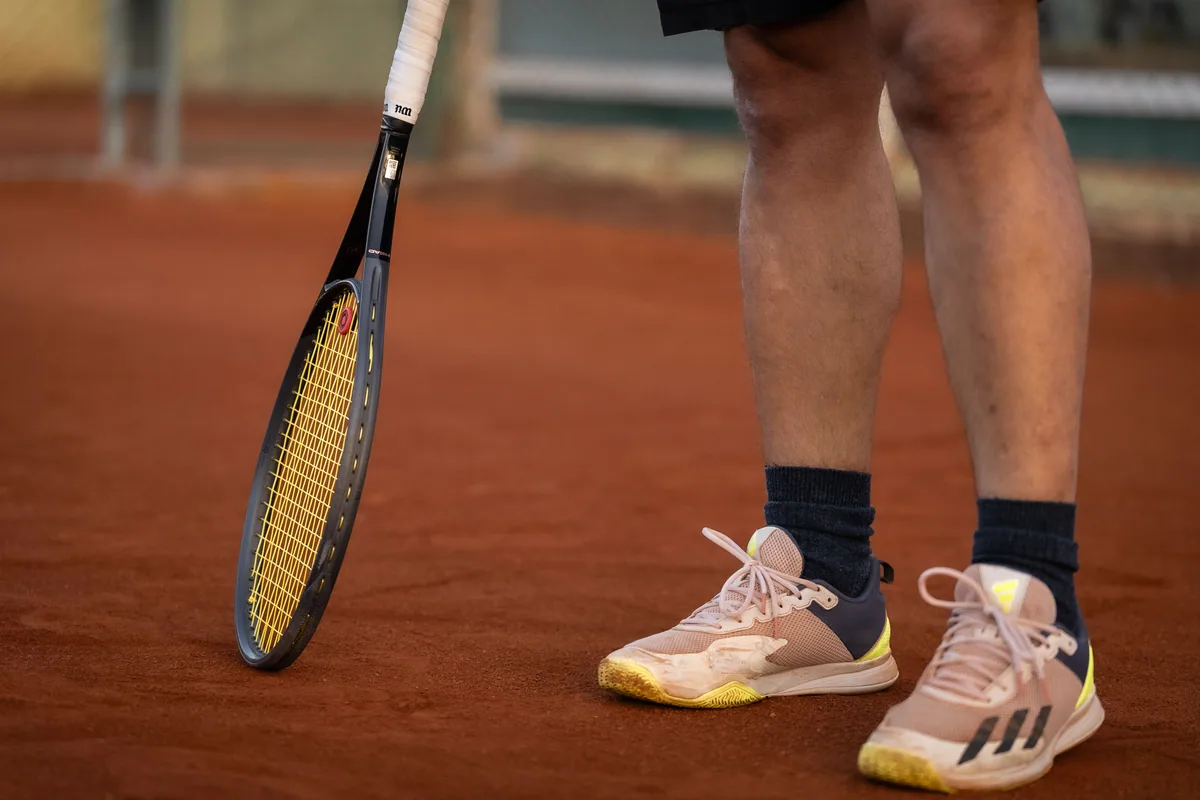
Match the outsole to your court and check fit during lateral movement.
Start with the surface
Check whether a shoe is intended for hard courts, clay, grass or indoor use. The court operator may have requirements, including non-marking soles. Follow the model’s stated surface guidance.
Fit Under Movement
Walk, stop and move sideways when trying shoes. Look for a secure heel and enough toe room. A shoe that feels comfortable standing still can move differently during a change of direction.
Compare support and wear
Consider lateral support, outsole wear and upper durability together. Your movement style and playing frequency affect which trade-offs matter most.
Replace Based on Condition
Inspect worn tread, damaged uppers and changes in fit. There is no single replacement schedule that suits every surface and player. Do not use comfort marketing as a guarantee against injury.
Before Ordering Another Pair
Write down your usual surface, current shoe size and where your old shoes wear first. Check the exact outsole version on the order. An All Court model and a clay version can share a family name while using different soles.
Herringbone, Omni and Mixed Soles
Herringbone is called espiga in Spanish. Babolat’s padel outsoles combine herringbone zones for sand and omni zones for artificial grass. Check the outsole version against your club’s surface before ordering.
Size Advice Belongs to the Model
Franklin recommends half a size down for ACV Pro unless you prefer a roomier fit. JOOLA R4LLy has its own size chart. Compare your foot measurement with the chart for the exact model and check return conditions; the same size need not fit alike across models.